
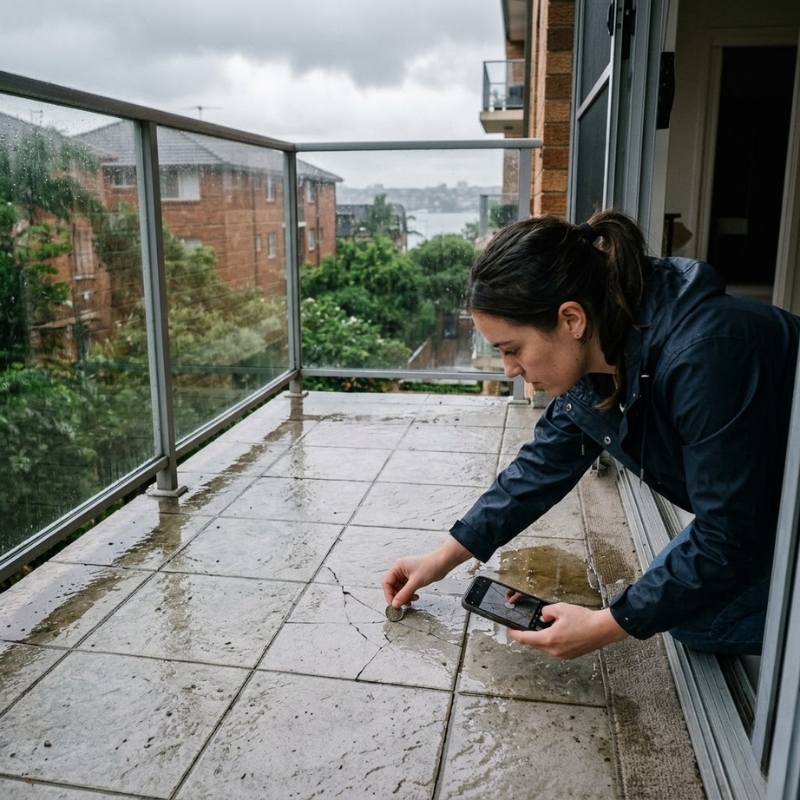
A cracked tile on a balcony can mean anything from a simple impact chip to a bigger moisture problem hiding underneath the surface. In Sydney, balconies cope with a unique mix of stressors: sharp temperature swings between sunny days and cool nights, wind-driven rain, salty coastal air in many suburbs, and lots of older apartment stock where original drainage details weren’t designed for today’s expectations.
The tricky part is this: tiles and grout are the “wear layer”. They’re not the waterproof barrier. When cracks show up, you’re really trying to work out whether you’re looking at a surface-level issue, a movement issue, a drainage issue, or a sign that water is already travelling under the tiled system.
This guide helps you sort cosmetic cracking from the patterns and paired symptoms that more often point to waterproofing trouble—without turning it into guesswork.
First, what counts as “cosmetic” cracking?
Cosmetic cracking is usually localised and doesn’t come with other moisture indicators. It’s the kind of crack that stays the same over time and doesn’t create a pattern.
Common cosmetic causes
• A dropped object (planter, chair leg, tool) causing a chip or star crack
• A manufacturing defect in a tile that shows up later under normal load
• A hairline crack in a single tile that doesn’t line up with grout joints
• Minor edge chipping where tiles meet a threshold or trim
Cosmetic signs that usually stay low-risk
• One or two tiles only, especially away from drains and doorways
• No hollow/drummy sound around the crack
• No white powdery residue (efflorescence) appearing over time
• No water pooling in that zone after rain
• No staining on ceilings or walls below (where relevant)
Cosmetic doesn’t mean “ignore it forever”. It means you can monitor and investigate calmly, rather than treating it as an emergency.
Q&A: If I replace one cracked tile, does that fix the problem?
It can—if the crack was purely impact-related. But if the tile cracked because the substrate moved, water is undermining the adhesive, or drainage is holding water in that area, a replacement tile often cracks again or debonds. The replacement should come after you’ve identified the cause, not before.
The big question: why do balcony tiles crack?
Balcony tiles crack when the system beneath them is stressed. Sometimes that stress is dry movement (temperature expansion, building movement). Sometimes it’s wet movement (water getting under tiles and breaking down adhesives, causing debonding and flex). Very often, it’s a combination.
If you want a simple overview that ties causes to what you can observe on site, this is a good place to start: what causes balcony tiles to crack.
The most common causes of Sydney balconies
1) Thermal movement and sun exposure
Balconies heat up fast in direct sun. That expansion and contraction can:
• Stress grout lines
• Stress tile-to-tile edges
• Expose missing or poorly placed movement joints
Cracks from thermal stress often show up as repeating patterns, especially on large exposed balconies.
2) Building movement (especially in older apartments)
Older balconies can have:
• Minor slab movement
• Cracks in the substrate that reflect through tile finishes
• Deflection under load (people, furniture, planters)
Movement-driven cracks often align with substrate cracks or occur near structural transitions.
3) Drainage and ponding
When water pools (especially near doors or low spots), it doesn’t just sit on the surface. Over time, it can:
• Work into grout microcracks
• Travel under tiles via capillary action
• Keep adhesives damp for long periods
• Accelerate salt deposition and debonding
4) Adhesive breakdown from persistent moisture
Once water lives under tiles, the adhesive can soften or lose its bond. That leads to:
• Drummy/hollow tiles
• Tile edges flexing under foot
• More cracking and grout failure
5) Poor detailing at thresholds and penetrations
Common weak points include:
• Door thresholds (where the balcony meets the internal floor)
• Balustrade posts and fixings
• Planter boxes or built-in seating
• Outlets and scuppers
A small leak at one of these points can travel invisibly under the tiled layer.
Q&A: Is cracked grout as serious as cracked tiles?
Cracked grout can be an early sign that movement or moisture is present. On a balcony, repeated grout cracking in the same line—especially after heavy rain—deserves attention because it can be the pathway water uses to enter and spread beneath the surface.
Crack patterns: what they often mean
Crack location and shape matter. Here are the patterns that tend to be more informative than the crack itself.
Pattern A: a single star crack in the centre of a tile
Often impact-related, especially if:
• The crack radiates out from one point
• There’s a visible chip or mark
• Nearby tiles sound solid
What to do:
• Monitor and photograph
• Check that the tile isn’t rocking or hollow
• Consider replacement if sharp edges or water entry is a concern
Pattern B: cracks that follow grout lines
This can suggest movement or substrate stress, especially if:
• Multiple grout lines crack in a connected path
• The cracking repeats seasonally
• Tiles nearby start sounding hollow
What to do:
• Check for movement joint placement
• Look for low spots holding water
• Inspect for drummy tiles around the crack line
Pattern C: repeating cracks in the same area after repairs
If someone has regrouted or patched and the same cracks return, that’s a clue:
• The cause isn’t the grout
• The system is moving or undermined beneath
What to do:
• Stop doing cosmetic repairs as the “solution”
• Investigate moisture under tiles, falls, outlet performance, and threshold details
Pattern D: cracking near the balcony door or threshold
This area is high-risk because it’s where:
• Water can be driven in by wind
• Ponding can occur if the falls are wrong
• Movement occurs between the balcony and the internal structure
What to do:
• Check whether water pools near the door after rain
• Look for swelling, bubbling paint, or damp smells internally
• Photograph the threshold condition after a storm event
Q&A: If my balcony is covered, can water still get under the tiles?
Yes. Wind-driven rain, condensation, cleaning water, and splash from storms can still wet balcony surfaces. Even small amounts of recurring moisture can become a problem if drainage is poor or if water tracks into junctions and stays there.
The “paired symptoms” test: when cracks suggest waterproofing trouble
A cracked tile on its own is ambiguous. A cracked tile plus another symptom is far more diagnostic. Use the paired symptoms below like a triage tool.
Cracks + drummy/hollow tiles
If tiles around the cracked area sound hollow when tapped (or feel slightly springy underfoot), that often indicates:
• Debonding
• Moisture affecting adhesion
• Substrate movement
Why it matters: Once debonding starts, water can travel further under the tiled layer, expanding the affected area.
Cracks + efflorescence (white powdery deposits)
Efflorescence is usually salts being carried to the surface by moisture. On balconies, it can show up as:
• White haze on tiles
• Powdery residue in grout lines
• Staining patterns that worsen after rain
Why it matters: it’s a strong sign that moisture is moving through the system—not just sitting on top.
Cracks + water pooling that lasts hours after rain
If water regularly ponds in the same area, you’re looking at a “stress zone” where water exposure is prolonged.
Why it matters: prolonged wetness increases the chance of:
• Grout microcracking
• Adhesive softening
• Moisture tracking to edges, thresholds, and penetrations
Cracks + staining or dampness below (or in adjacent walls)
If the balcony sits above another space (a lower balcony, a room, a car space), visible staining below is a major escalation trigger.
Why it matters: it suggests water is getting past the tiled layer and into the structure.
Cracks + rust staining or concrete spalling
Rust staining can indicate corrosion of embedded steel or metal components. Spalling (concrete breaking away) is more serious again.
Why it matters: at this point, the issue can shift from “finish problem” to “structural durability problem”.
If you want a homeowner-friendly list of the common red flags in one spot, use this reference: cracked balcony tiles warning signs.
A practical after-rain inspection checklist (10 minutes)
Do this after a decent Sydney downpour, when the surface has had time to show patterns.
1) Photograph the whole balcony first
• Stand back and capture wide shots
• Then capture close-ups of cracks, grout lines, and corners
• Take one photo with something for scale (coin or ruler)
2) Look for pooling and track its edges
• Where does water sit longest?
• Does it sit near the door threshold?
• Does it pool around balustrade posts or corners?
3) Check for drummy tiles
Tap lightly (a coin works) and listen:
• Solid tiles sound “sharp”
• Drummy tiles sound “hollow” and dull
Mark drummy tiles on a quick sketch or note in your phone.
4) Look for efflorescence changes
• Compare photos over a few rain events
• Note whether the white residue increases after wet weather
5) Smell check
It sounds basic, but damp odours can reveal moisture trapped under finishes—especially if the balcony is enclosed or sheltered and doesn’t dry out quickly.
Q&A: Should I seal my grout to stop water from getting in?
Sealers can reduce surface absorption, but they don’t fix drainage issues, movement issues, or membrane problems beneath tiles. If water is travelling under the tiled system, sealing the top can sometimes mask symptoms while the underlying issue continues.
Strata considerations in Sydney apartments
Balconies are a common source of confusion because “who owns what” can vary depending on the building and its documents. In many apartment scenarios:
• The tiled finish may be treated differently from the structural slab
• Waterproofing-related issues may involve common property considerations
• Damage to another lot (or common area) raises urgency and documentation needs
What you can do as an owner or resident:
• Document symptoms with dates and weather context
• Record where water is pooling and where cracks are spreading
• Report early rather than waiting for visible damage below
If the symptoms suggest water is spreading beneath the surface, you’ll often get a clearer answer by focusing your question like this: “How do I confirm how to tell if a balcony leak is under tiles?” That framing helps keep the conversation evidence-based, not assumption-based.
Why quick cosmetic fixes often fail on balconies
Balcony problems are often “system problems”, not “surface problems”. Here’s why common quick fixes don’t hold up when moisture is involved:
• Regrouting doesn’t remove water trapped under tiles
• Replacing a tile doesn’t correct falls or drainage design
• Applying surface sealers won’t repair failed detailing at outlets/thresholds
• Silicone patching at random edges can divert water to a new weak point
A better approach is: identify the cause, confirm the moisture pathway, then choose the correct repair strategy.
Q&A: If the balcony tiles are cracking, should I stop using the balcony?
If you have any of the following, it’s sensible to escalate quickly and be cautious:
• Spalling concrete or rust staining
• Widespread drummy tiles (large areas)
• Evidence of water affecting internal areas or the unit below
• Loose balustrade posts, wobble, or suspected structural deterioration
Cosmetic cracks alone don’t usually require stopping use, but paired symptoms can change the risk profile.
What “good practice” looks like (without getting lost in jargon)
For balconies and decks, waterproofing is typically treated as “above-ground external waterproofing”. That brings additional design and detailing considerations compared with internal wet areas.
If you want a plain-English overview of the Australian Standard context for external above-ground waterproofing, this resource is a helpful starting point: guidance on above-ground waterproofing (AS 4654.2).
The practical takeaway for homeowners is:
• Drainage and falls are not “nice to have”
• Thresholds and penetrations deserve extra attention
• Movement accommodation matters on sun-exposed balconies
• The system must manage water, not just “resist” it
When it’s likely cosmetic vs likely waterproofing-linked
Here’s a simple way to think about it.
More likely cosmetic
• One or two isolated tiles
• No drummy tiles nearby
• No efflorescence changes over time
• No ponding near the crack zone
• No signs of water inside or below
More likely waterproofing-linked (or moisture-linked)
• Cracks appear with drummy tiles or debonding
• Efflorescence increases after wet weather
• Repeating cracks return after repairs
• Water consistently pools near doors/outlets
• Any staining/dampness below or adjacent to the balcony
If you’re in the second category, the goal is to confirm the pathway and stop water from travelling under the system before damage spreads.
FAQs
Are cracked balcony tiles always a sign of waterproofing failure?
No. Cracked tiles can be cosmetic, impact-related, or movement-related without the waterproofing being compromised. The risk increases when cracks appear alongside dry tiles, efflorescence, ponding, or water-related damage nearby.
What does it mean if my balcony tiles sound hollow?
Hollow (drummy) tiles often indicate debonding—sometimes from moisture affecting adhesives, sometimes from movement. If drummy areas are expanding, treat it as a sign that the system beneath the tiles may be under stress.
Why is water pooling near my balcony door?
Pooling usually points to insufficient falls, a low spot, or outlet performance issues. Door thresholds are also a high-risk junction where wind-driven rain can enter and where water may sit longer.
Can I just regrout to stop leaks?
Regrouting can improve the surface temporarily, but it won’t fix problems caused by trapped moisture, failed detailing, poor falls, or membrane issues beneath tiles. If symptoms return, the underlying cause is still active.
What should I document for strata if I suspect water ingress?
Take wide and close-up photos, note dates and rainfall timing, mark areas of ponding, record any drummy tile zones, and photograph any damage below or internally. Evidence tied to weather events helps the issue get assessed faster.
