Bathroom renovations in Sydney tend to move fast: demolition one week, trades rotating through the next, tiles arriving on site before the plaster even feels dry. And that’s exactly why waterproofing gets rushed, assumed, or treated like a simple “paint-on” step.
In reality, most waterproofing failures don’t happen because someone “forgot the membrane”. They happen because small details were missed before the membrane went on, or because the renovation sequence didn’t allow the waterproofing system to cure and be checked properly before tiling.
This checklist is written for homeowners (and anyone project-managing a renovation) who want to prevent the common “we’ll deal with it later” mistakes that turn into leaks, swollen skirting boards, mouldy smells, or loose tiles.
How to use this checklist during a Sydney bathroom renovation
Think of this as a set of “hold points”. A hold point is where you pause the renovation briefly to check something before the next trade covers it up.
The three biggest hold points are:
• After demolition and before substrates are repaired or sheeted
• After prep and before waterproofing starts
• After waterproofing and before tiling begins
If you only do one thing: take clear photos at every hold point. Photos are your proof of what was done and when.
Quick answer
A good bathroom waterproofing outcome usually comes down to four things:
• The substrate is properly prepared (flat, stable, clean, correctly sheeted)
• Drainage and falls are right before membrane work begins
• Corners, junctions, and penetrations are detailed carefully (not just “rolled over”)
• The membrane is allowed to cure and is checked before the tiles hide everything
Step 1: Pre-demo planning that affects waterproofing later
Waterproofing is influenced by decisions you make before anyone picks up a hammer.
Confirm the bathroom layout and wet-zone boundaries
Before demolition, confirm:
• Where the shower will be (and whether it’s hobbed or hobless)
• Where the floor waste will sit, and whether plumbing changes are needed
• Where niches, nib walls, and shelves are planned
• Where towel rails, shower screens, and grab rails may be fixed later
Why it matters: fasteners and fixings through wet areas are one of the easiest ways to puncture a waterproofing system after the fact. Planning early reduces “surprise holes” later.
Choose finishes with waterproofing in mind
Tiles, stone, and feature finishes affect:
• The acceptable flatness of walls and floors
• Adhesive selection and drying conditions
• Whether extra substrate prep is required
In older Sydney homes, wall and floor movement can also be a factor. If the structure is shifting, you want that identified early, not after the membrane is on.
Q&A: Do you waterproof the whole bathroom floor or just the shower?
In many renovations, the shower area is the highest-risk zone, but bathroom floors can still see regular water exposure (splashes, overflows, wet feet, cleaning). The right scope depends on layout, thresholds, and how water will realistically behave in the room. The key is that wet areas and transitions are treated intentionally, not guessed on the day.
Step 2: Demolition checks people skip (but shouldn’t)
Demolition isn’t just “rip it out”. It’s also your best chance to see what’s really happening behind the tiles.
Inspect for hidden water damage
During demo, look for:
• Dark staining around the shower base or bath
• Swollen skirting or architraves
• Crumbly plaster, bubbling paint, or soft wall sheeting
• Musty smells that intensify when materials are removed
• Rusted fixings or corroded metal angles
If you find damage, don’t just patch and proceed. Identify the source: failed junctions, movement cracks, old plumbing leaks, or poor falls.
Check the subfloor and framing condition
Sydney bathrooms often sit over:
• Timber floors in older homes
• Concrete slabs in apartments and newer builds
Check for:
• Excessive bounce in timber floors
• Rotten bearers/joists near wet zones
• Cracks or significant slab movement
• Evidence of prior “quick fixes” (silicone over gaps, patch membranes, random sealants)
These conditions affect preparation and whether additional repairs are needed before waterproofing.
Q&A: If my bathroom is on a concrete slab, is waterproofing less important?
No. Concrete can still transmit moisture, and leaks can still travel to adjacent rooms or down into lower levels (especially in multi-storey buildings). Slabs don’t eliminate the need for correct detailing at junctions, penetrations, and drainage.
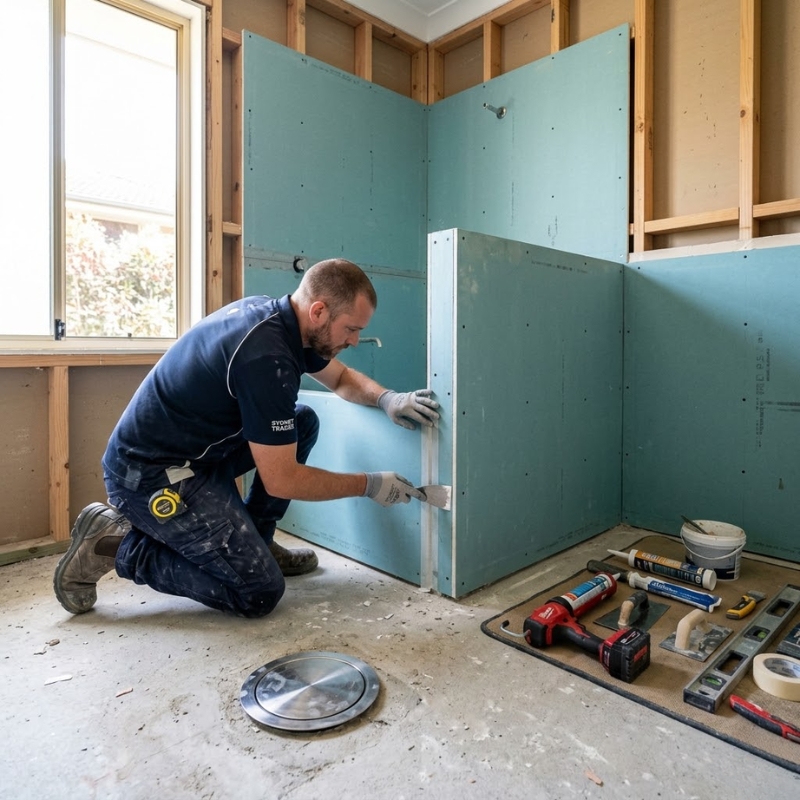
Step 3: Substrate and sheet preparation (the foundation of everything)
Most membrane problems start with the surface it’s applied to.
Confirm suitable wall and floor linings in wet areas
Checklist:
• Wet-area wall sheeting is suitable for the location (especially inside showers)
• Sheets are installed to the correct spacing and fixing pattern
• Joints are treated as required before membrane work
• No movement or flex is present when pressure is applied
If your renovation involves new walls, niches, or nib walls, treat these as waterproofing-critical, not decorative add-ons.
Ensure the surface is clean, sound, and ready
Before waterproofing starts, check:
• Dust is removed (vacuumed, not just swept)
• Old adhesive residue is removed where relevant
• The surface is dry (including after any patching compounds)
• Cracks are assessed and treated appropriately (not simply “painted over”)
The “flatness and falls” check (before membrane)
This is a common miss:
• Walls should be flat enough for tiles without excessive adhesive build-up
• Floors should have appropriate falls to the floor waste so water doesn’t pond
If the floor “looks fine” but holds a puddle near the shower entry, that puddle often becomes a future leak-risk zone.
Step 4: Drainage details that make or break the job
Drainage components are where water concentrates. That means they deserve extra attention.
Confirm floor waste and puddle flange set-up
Checklist:
• The floor waste position matches the planned shower layout
• The waste height is correct relative to the finished tile level
• The puddle flange (or equivalent) is appropriate and installed correctly
• The surrounding area allows the waterproofing system to integrate as designed
A common renovation mistake is discovering late that the grate sits too high (or too low) once tiles are planned. Fixing it after waterproofing is messy and risky.
Plan the shower screen and hardware fixings now
Before waterproofing:
• Confirm where the shower screen channel will be fixed
• Confirm whether fixings can go into safer zones (or require special detailing)
• Confirm where door stops, robe hooks, and rails will be installed
This helps reduce later penetrations through waterproofed areas.
Q&A: Is silicone enough around drains and corners?
Silicone is not a waterproofing system. It can be part of detailing in some situations, but relying on silicone alone is a common reason bathrooms leak. The primary waterproofing system should be continuous and correctly integrated with drainage and junctions.
Step 5: Waterproofing detailing checklist (the steps homeowners rarely see)
This is where “looks fine” jobs fail later—because the critical work is in corners, joins, and penetrations.
Corners, junctions, and changes of plane
Checklist:
• Internal corners are detailed as required (not just rolled over once)
• Wall-to-floor junctions are treated as a high-risk line (continuous and reinforced as required)
• Any change of plane is handled with the correct system approach (not improvised)
Corners are where movement happens. Movement plus moisture equals failure if the system isn’t detailed properly.
Penetrations: pipes, mixers, and fittings
Checklist:
• All penetrations are identified before waterproofing starts
• Pipe penetrations are detailed properly (not “cut close and hope”)
• Mixer bodies and in-wall fittings are sealed and integrated as required
• No gaps remain around pipes before membrane layers go on
Penetrations are one of the most common “hidden leak” points, because tile and grout hide the entry pathway while water slowly tracks behind.
Hobs, step-downs, and shower entries
If the shower is hobbed or there’s a step-down:
• The waterproofing transition is continuous over and around the hob/step
• External faces (where water can splash) are treated appropriately
• The entry detail doesn’t create a water trap that points back into the wall junctions
If the shower is hobless:
• The fall design is even more important
• The entry detail must control splash and surface water
• Drainage performance becomes a daily-use factor, not a theoretical one
Q&A: What’s the single most missed waterproofing detail in bathroom renovations?
For many renovations, it’s the combination of penetration detailing and junction reinforcement—especially around shower mixers, pipework, and the wall-to-floor line. These spots see movement, vibration, and constant moisture exposure.
Step 6: Curing and drying times (the rushed step that causes rework)
Sydney’s weather swings—humid days, cool snaps, and closed-up bathrooms with limited airflow—can affect drying and curing.
Checklist:
• The waterproofing system is given the full cure time required by the product used
• The bathroom is ventilated appropriately (without forcing dust onto wet membranes)
• Trades don’t walk on or contaminate the membrane during curing
• Tiling does not begin “just because the schedule is tight”
Rushing this stage can lead to compromised membrane integrity and adhesion issues that appear months later.
Q&A: Can you tile the next day after waterproofing?
Sometimes, but it depends on the specific product system, site conditions, and how much moisture is in the space. “It feels dry” is not a reliable test. Treat curing as a non-negotiable part of the renovation sequence.
Step 7: Pre-tiling inspection (your last chance before it’s hidden)
Once tiles go down, you can’t easily see what’s underneath. This is where your photos and checks matter most.
Checklist:
• Waterproofing is continuous with no obvious pinholes, thin spots, or missed areas
• All corners and junctions look deliberately detailed (not patchy)
• Penetrations are sealed as part of the system, not as an afterthought
• The drain area is clean and correctly integrated
• No damage has occurred since application (tool marks, tears, contamination)
If you want a simple homeowner habit: stand in the shower area and look for anything that seems “unfinished”. Waterproofing should look methodical and complete, not like a hurried coat of paint.
If you want a deeper, step-by-step reference you can keep open during the renovation, use this guide: bathroom renovation waterproofing checklist.
Step 8: Tiling and grouting decisions that affect waterproofing performance
Tiles aren’t waterproof. Grout isn’t waterproof. They are finishes that manage surface water—your waterproofing system is what protects the structure.
Checklist:
• Tile selection suits the wet area (slip resistance, size, maintenance reality)
• Adhesives and grouts are appropriate for wet zones
• Movement joints are included where needed (instead of grouting everything solid)
• Water is directed toward the waste, not held at the entry or corners
A common failure pattern is “hairline cracks” that appear at changes of plane and let water track behind tiles over time.
Q&A: If grout cracks, does that mean waterproofing has failed?
Not always, but it’s a warning sign. Grout can crack due to movement, poor installation, or substrate issues. The risk is that cracked grout increases water entry behind tiles, which then tests the waterproofing system beneath.
For homeowners wanting to understand what early warning signs look like before a major leak appears, this is worth reading: signs your bathroom waterproofing has failed.
Step 9: Documentation checklist (protect your renovation outcome)
Good documentation helps in two ways:
• It encourages careful work because everyone knows it’s being tracked
• It gives you evidence if problems appear later
Checklist:
• Photos of substrate condition after demo
• Photos of drainage set-up before waterproofing
• Photos of junction and penetration detailing before it’s covered
• Product information (system used, batch numbers if available)
• Who completed the work, and what scope was included
• Dates: when waterproofing was applied and when tiling started
For NSW-specific licensing and regulatory guidance about waterproofing work, you can also refer to the NSW Government information here: Waterproofing work.
Step 10: Common “missed steps” recap (Sydney renovation edition)
If you want the short list of what usually gets missed, it’s these:
• Not checking floors for ponding before waterproofing
• Treating drains as “the plumber’s problem” instead of a waterproofing integration detail
• Forgetting to plan shower screen and hardware fixings early
• Rushing curing because tiles are booked
• Skipping a pre-tiling inspection (the last visible moment)
• No photo record of key stages
• Assuming tiles and grout will stop water on their own
If you’re standing on site and wondering what should be checked right before tiles go down, keep this handy: what to check before tiling a bathroom.
When to involve a licensed professional or seek further advice
A checklist helps, but some situations have a higher risk and deserve extra caution:
• Repeated leaks from the same area (even after “repairs”)
• Apartment bathrooms where water can affect other lots
• Visible structural movement, ongoing cracking, or bouncy timber floors
• Non-standard drainage layouts or relocation of wastes
• Hobless showers with poor falls or frequent ponding
• Renovations where timelines force trades to overlap too tightly
In these cases, the cost of getting it wrong is usually far higher than slowing down to confirm the right approach.
FAQs
What’s the best time to check waterproofing during a bathroom renovation?
Do it at hold points: after demolition (to assess damage), before waterproofing starts (to confirm prep and falls), and immediately before tiling (to confirm continuity and detailing).
What should I photograph during waterproofing?
Photograph the substrate condition, drain/waste integration, corners and wall-to-floor junctions, and all penetrations (pipes, mixers, fittings). Take wide shots for context and close-ups for detail.
Do tiles and grout stop water from getting behind walls?
No. Tiles and grout manage surface water but are not waterproof barriers. Water can pass through grout and small cracks, especially over time, which is why the membrane beneath matters.
Why do bathrooms sometimes leak years after a renovation?
Slow water entry can build over time due to movement, cracking grout, poorly detailed penetrations, or drainage ponding. The leak shows up later, but the weakness was often present from day one.
What’s the biggest red flag before tiling starts?
Anything that looks patchy, rushed, or incomplete—especially around corners, penetrations, and drains. If you can’t clearly see how those details were handled, that’s a risk.
