If you’ve ever owned a concrete pool—or even thought about it—you’d know they’re a solid investment. But here’s the rub: concrete and water aren’t exactly best mates. Over time, that mix can spell trouble. Cracks, leaks, and flaking finishes don’t happen by accident. More often than not, it comes back to poor waterproofing. Waterproofing a concrete pool isn’t just a technical step—it’s what keeps the whole setup ticking. Without it, the surface slowly breaks down, the structure cops damage, and the repair bills start stacking up. And let’s be honest, nobody wants to rip up tiles six months after they’ve been laid. If you’re in it for the long haul, waterproofing is a non-negotiable requirement.
What problems arise if waterproofing a concrete pool is overlooked?
Skipping the waterproofing step might not bite straight away. But give it a season or two, and you’ll start spotting the signs. Damp patches. Wobbly tiles. Water levels are dropping faster than expected. The pool shell starts to tell the story—quietly at first, then all at once. Here’s what can sneak up on you:
- Cracks forming along the shell—concrete’s tough, but once moisture gets in, it’s game over for structural integrity.
- Chemical use increases, as it becomes necessary to balance pH in a leaky system. You’ll burn through chlorine like there’s no tomorrow.
- Soil erosion under the pool—especially in sloped yards or areas with dodgy drainage.
- Efflorescence and stains on tilework, thanks to minerals leaching out as water escapes.
- Membranes and finishes break down faster, meaning you’ll be back at square one in no time.
- Leaks affecting nearby structures, especially if your pool’s close to fences or your house slab.
Once water finds a path in, it’s relentless. Concrete isn’t waterproof on its own—it’s more like a sponge with ambition.
How does waterproofing a concrete pool protect against structural damage?
A lot is going on beneath the surface of a pool. You’ve got pressure from all sides—groundwater pushing in, pool water pressing out. Without proper waterproofing, that pressure builds in all the wrong places.
Waterproofing does more than plug gaps:
- It stops water from seeping through, reducing the strain on your concrete shell.
- Surfaces stay dry underneath, so tile adhesives and grouts stick like they should.
- Hairline cracks remain small because the membrane absorbs tiny shifts before they escalate into significant issues.
- Reinforcing steel (rebar) is protected, preventing rust that can cause the concrete to crack from the inside out.
- You avoid major repair work, like jackhammering out weakened patches or replacing entire sections.
- Maintenance becomes easier because sealed pools retain water, heat, and chemicals more effectively.
A proper seal holds everything together. It’s the silent partner doing the hard yards while your pool gets all the attention. Want peace of mind? Select reliable solutions for effectively waterproofing a concrete pool.
How does poor waterproofing in concrete pools impact maintenance costs?
Cutting corners with waterproofing usually backfires. It’s like buying cheap tyres—you’ll be replacing them twice as often, and it’ll cost more in the long run. Pools are no different. Ongoing costs from poor sealing include:
- Constant retiling is necessary, as water loosens adhesives and grout starts to flake away.
- Expensive leaks, because the source is rarely where the water shows up.
- Rising energy bills, as you top up and reheat lost water.
- Spiking chemical costs, trying to stabilise a shifting water balance.
- Pump and filter damage, working overtime to compensate for leaking volumes.
- Premature resurfacing, when peeling finishes give away deeper problems.
Ever wondered why your pool chemicals vanish faster in summer? Poor waterproofing might be to blame. You’re not just treating the water—you’re treating whatever’s underneath. For more clues, explore why tiles fail without proper waterproofing.
What methods are most effective for waterproofing a concrete pool?
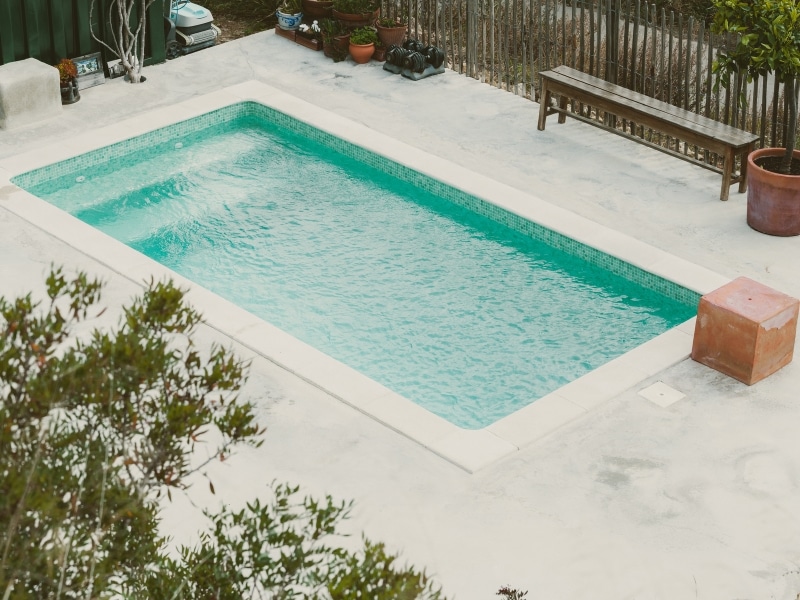
There’s no one-size-fits-all here. Pool waterproofing depends on how it’s built, what sits underneath, and even where you live in Australia. The key is layering protection, so if one barrier gives, another backs it up. Top methods include:
- Liquid membranes, rolled or sprayed on, offer flexible sealing with minimal joints.
- Cementitious coatings, which are mixed and applied like paint, are ideal for bonding directly to concrete.
- Sheet membranes, pre-formed and great for high-stress zones like corners and expansion joints.
- Epoxy sealants are chemically resistant and ideal for areas exposed to high levels of chlorine.
- Hybrid systems, combining two or more techniques for ultimate peace of mind.
- Detailing tapes and flashings, which wrap around awkward spots, such as skimmers and drains.
Think of it like building a raincoat—every layer helps, but the stitching matters most. If one seam fails, the whole thing’s useless.
Can waterproofing enhance the effectiveness of waterproofing a concrete pool?
Cement-based waterproofing sounds simple—but it’s a favourite for good reason. It bonds tightly, holds up under pressure, and doesn’t mind a bit of moisture during application. Ideal for both new builds and refurb jobs. Why tradies trust it:
- Works in constantly wet environments, without breaking down over time.
- Shrugs off chlorine and pool chemicals, keeping your membrane from becoming brittle.
- Applies over damp surfaces, making it less weather-dependent on installation days.
- Pairs well with tiling systems, meaning fewer compatibility issues.
- Handles deep water pressure, especially in large or commercial pools.
- Easy to patch later, in case something shifts or needs touching up.
Some councils and strata bodies even recommend it for public pools. If you’re managing a high-traffic area or want a no-nonsense fix, it’s a smart pick. To check compliance in your area, flick through the NSW swimming pool laws & safety compliance guide.
How does a waterproof render support pool durability?
Before anything flashy goes on—tiles, mosaics, or paints—there’s a less glamorous layer doing the real work: render. If it’s waterproof, your whole system gets a leg up.
Why render matters:
- It prevents micro-movement damage, giving your tiles a stable, solid base.
- Creates an even surface, allowing tiles or paint to go on flat and stay in place.
- Shields concrete from chlorides and salts, both common culprits in concrete corrosion.
- Helps membranes last longer by smoothing out imperfections that cause failures.
- Improves thermal behaviour, reducing heat loss through the pool walls.
- Makes repairs easier, since future patchwork sticks better to prepared surfaces.
Here’s a quick breakdown:
| Waterproofing Component | Role | Notes |
| Waterproof render | Surface prep & base seal | Must cure properly before tiling |
| Membrane layer (liquid/sheet) | Main moisture barrier | Choose based on pool shape/traffic |
| Tile adhesive | Bond tiles to the surface | Compatible with render + membrane |
| Grout & sealer | Final waterproof touch | Reapply sealers every 12–24 months |
For balcony applications with similar exposure issues, you might be interested in exploring the best waterproofing methods for balconies.
Final thoughts on sealing membrane choices for pools
When it comes to sealing a concrete pool, there’s more to it than choosing a product off the shelf. You’re building a system—one that needs to flex, breathe, and hold strong under constant stress. Membranes, when applied correctly, become the invisible hero. But get the mix wrong, or rush the job, and the damage might not show up until it’s too late. Think of waterproofing like laying a strong foundation. It’s not the most exciting part of the build, but it’s what keeps everything else standing. Whether you’re going full cementitious or layering up with hybrids, what matters is how it’s installed—and by who. Discover how Ultimate Waterproofing Solutions protects pools with sealing systems that go the distance, not just from one tiling season to the next.


